Table of Contents
With over 20 million followers across his social channels, more than 150 cookbooks to his name, a Hindi-language cooking channel and 19 years of hosting Khana Khazana, the longest-running TV cooking show in Asia, it's safe to say Sanjeev Kapoor is one of the most accomplished chefs of our time. He knows his food but even so, the globally renowned cooking icon says he never stops learning.
Perhaps that is partly what lured him to appear as a guest judge on MasterChef Australia. "The best food show in the world," as he calls it, is a hit in his native India. And although it was Chef Kapoor who brought his culinary expertise to season 18's contestants, he says it's the experience he received in return that made the visit so special. His travels provide him with the biggest food lessons, and his advice to anyone - MasterChef level or dipping their spoon in the cooking world for the first time - is to keep learning, always.
Check out our Q&A with Chef Kapoor below about his time Down Under, his Arth sauce range bringing Indian cuisine into Aussie homes and of course, the importance of learning:
Advertisement
Who shaped your love of food and cooking?
SK: I think the early years are incredibly important because that is when your relationship with food begins. For me, it was my parents who laid that foundation. My father taught me to respect ingredients, especially fresh, seasonal produce. On weekends, he would take me to the wholesale markets where I would see fruits and vegetables in abundance. That's where I first began to learn, understand seasonality, freshness, quality and even price.
My mother, on the other hand, taught me how those ingredients transformed into simple, delicious home-cooked meals. Watching her cook showed me that good food doesn't have to be complicated.
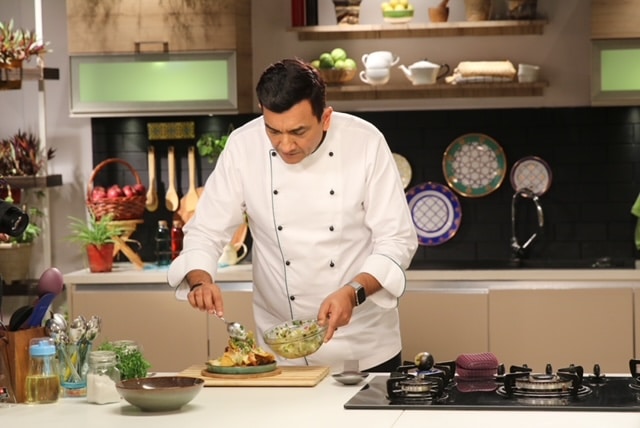
As I grew professionally, I learned from many chefs and I continue to learn even today. Every time I travel, I learn something new, and some of my greatest teachers have been street food vendors around the world. The people who cook every day to earn a living have an incredible understanding of food.
It was such a treat having you on MasterChef Australia - what was your favourite experience from the show?
SK: For me, it started from the moment I arrived on the set! The reception I got, the warmth from everyone, from the production team and the director to the judges, made me feel completely at home. Once I stepped into the MasterChef Australia kitchen, that feeling only grew stronger. These studio floors were not new to me. I may not have been a judge on the show before, but having watched it for so many years, it felt like I had always been a part of it.
But what stayed with me the most was the enthusiasm of the contestants. Each one was deeply passionate and completely immersed in what they were doing. Everyone wanted to beat the other, in the nicest possible way, with genuine respect and encouragement. The four judges were not only kind but incredibly supportive, creating such a positive environment. That overall warmth and positivity made the entire day very special for me.
What food experiences have you had during your time in Australia?
SK: I've been visiting Australia for a very long time and I think the one thing that has always stood out to me is its respect for high-quality ingredients. Australia also produces some exceptional wines. I have visited the Barossa Valley and have enjoyed some wonderful Shiraz over the years. Whenever I travel to Australia, I make it a point to bring back a few good bottles. And for truly special occasions, there's always a bottle of Grange.
As for Australian favourites, I can never resist picking up a few packets of Tim Tams at the airport. Vegemite, though, is one thing I've never really been a fan of.
Advertisement
Social media is changing the food landscape in so many ways - how does someone as accomplished as yourself feel about the rise of every-day food content creators?
SK: Social media has above all, democratised the world of media. Today, everyone is, in some sense, a micro-journalist expressing their thoughts, sharing their experiences and hoping others connect with them. I think it's wonderful that creators have a platform to express themselves. It has brought incredible diversity, creativity and new perspectives into the food space.
The only thing that concerns me at times is when success is measured only by the number of views. Views are important, but they shouldn't be the only measure of good content. What matters just as much is the impact that content creates. Does it educate? Does it entertain? Does it inspire someone to cook, think differently, or appreciate food in a new way? For me, that is where the real value lies. As creators, we should strive to create content that leaves a meaningful impact, not just content that generates numbers.
Are there any channels/chefs you love to follow?
SK: I am constantly discovering new chefs, new channels and new content all the time. I think that keeps things exciting because there is always something new to learn.
Congratulations on your Arth range - how did you decide which sauces and marinades to include in your range?
SK: Thank you! The Arth range at Coles is something we launched last year and a lot of research went into it before we introduced the products. For me, the starting point was creating a range that would appeal not just to the South Asian community - people who already know me and are familiar with my food - but also to the mainstream Australian customer. I wanted the range to bring both audiences together through flavours they could all enjoy.
From a product perspective, we also wanted to ensure there was something for everyone - mild, medium and spicier options with a good balance of flavours, colours and taste profiles. It is a detailed and sometimes complex process but I'm very happy with how the range has come together.
The idea of cooking Indian food can be daunting for some - do you have any tips on where to start?
SK: I think the best way to start with Indian food is to eat it more before you cook it. The more familiar you become with the flavours, the easier it is to understand how everything comes together. Then, start simple.
Don't try to cook an elaborate Indian meal on your first attempt. Pick one dish and focus on getting that right. Don't make cooking more complicated than it needs to be. If using a ready base or marinade helps you build confidence, that's perfectly fine. The important thing is to enjoy the process and not expect perfection the very first time.
Like anything else in life, cooking takes practice. And if you're cooking for family and friends, don't put yourself under too much pressure - tell them, I'm still learning.
It's a bit like opening a restaurant. I always say that if I'm opening a new restuarant or if someone asks me for advice, for the first few weeks there should be a sign outside saying, "We're teething, please bear with us." Follow the same principle when your'e cooking at home. Give yourself the time to learn, make mistakes and get better with every meal.
(Images: Supplied)
Check these out on MasterClass* for some more cooking inspo:
Yotam Ottolenghi Teaches Middle Eastern Cooking
Gabriela Camara Teaches Mexican Cooking
Joanne Chang: Bake Like a Pro
*CelebrityKind is a MasterClass affiliate partner. If you make a purchase through the links above, we may earn a small commission at no extra cost to you, so you'll also be helping us grow!
You Might Also Like:
https://celebritykind.ghost.io/content/files/2026/09/how-to-cook-like-chef-jose-andres-3-resources-you-need-right-now-1.html
https://celebritykind.ghost.io/content/files/2026/09/sumeet-saigal.html