Table of Contents
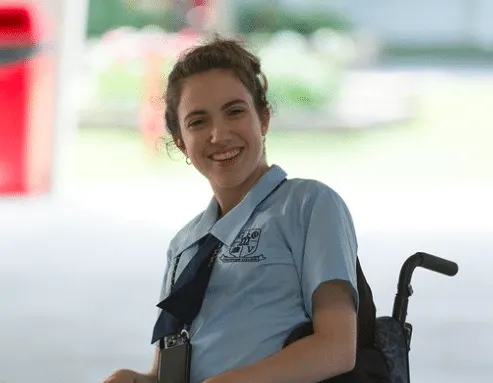
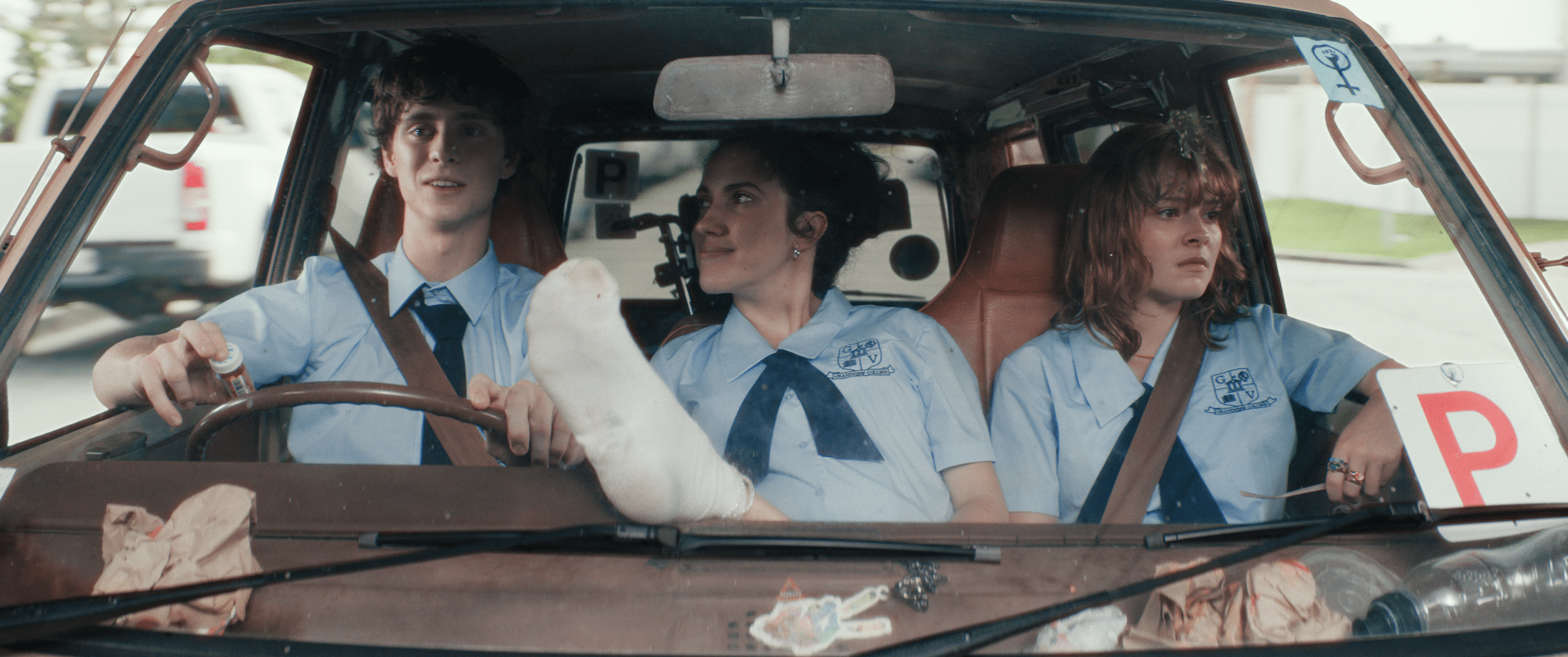
When Hannah Diviney was offered the role of snarky teen Norah Lipsick in the Aussie dramedy, Audrey, she knew right away she was up for the challenge. The 24-year-old Sydney-sider - who, FYI, is delightfully far from snarky herself but claims to share Norah's sarcastic tone - had never starred in a feature film before. She was spotted by the project's creative team while working on SBS series, Latecomers. Taking on the part would not only mean immersing herself in the unfamiliar, fast-paced world of film, but also being away from home for several weeks and relying on carers, something she'd never done before.
Daunting, for sure. But that wasn't going to stop Hannah from doing it anyway.
You see, she's on a mission to change the world, and specifically, an entertainment industry which is yet to fully embrace disabled actors or their storylines. Saying "yes" to moving out of her comfort zone, challenging stereotypes about cerebral palsy and blazing trails along the way? That's kind of her thing!
In the space of a few years, Hannah has co-founded a media company, written her first book, launched a campaign for a disabled Disney Princess, all while advocating for representation and accessibility, and now starring in her first movie. And she's just getting started.
Check out our chat with Hannah Diviney below on all things Audrey, navigating her rising stardom, finding a sisterhood of support and being the representation she never had.
What can you tell us about your latest project, 'Audrey'?
Hannah: 'Audrey' is a dark, like, pitch black Australian comedy about a forgotten soap star who was kind of on this path to television greatness and then she had kids, her career kind of stalled. It wasn't really working out so she took all of her dreams and put them into her daughter, Audrey. She's 17, quite precocious, wants her own life. So she kind of chafes against all her mum's expectations, jumps off the roof of her family home in protest, and ends up in a coma. And then her family goes through this process of realising that their lives have actually improved while she's in the coma!
Your character Norah is challenging disability stereotypes here, can you share more about her?
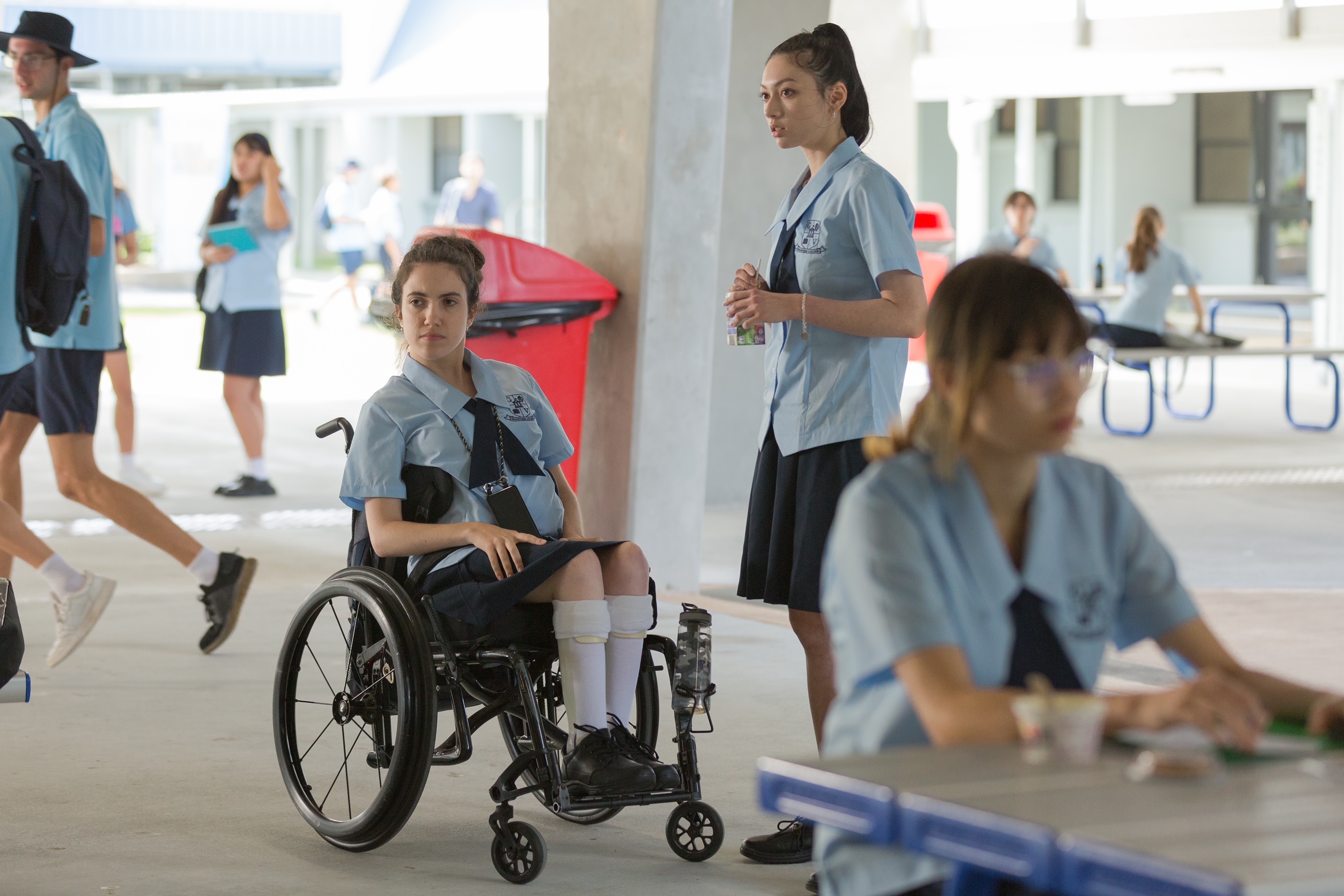
Hannah: For me, Norah is someone I jokingly refer to you as the 'forgotten child' because she doesn't really get space to be herself or even to exist fully until Audrey's in the coma. There's a really great scene that I loved doing where I say, "It took my sister falling into a coma for me to get reasonable access to the bathroom."
And so we really play on the comedy and it's quite subversive because I think, stereotypically, people expect that if you have a disabled child in the family, sometimes out of necessity, that person becomes the centre of things just in terms of time and resources and appointments and all the medical stuff, and so getting to flip that on its head and have Norah be the one that's like, "hey, over here!" was really fun.
Can you relate to Norah's story or arc at all?
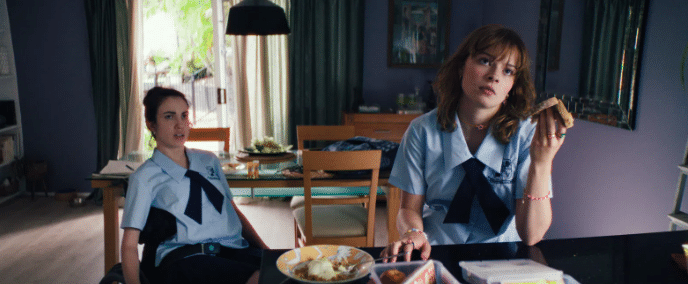
Hannah: The thing that Norah and I have in common the most is probably our dry sense of humour and sarcasm as a way of making life work. I'm very lucky to be in a completely different and hugely more positive and loving family dynamic than poor old Norah. In terms of that, I couldn't relate so much but I think the way she views the world and the way she just wants to be seen and heard more generally is definitely something I know a thing or two about.
Speaking of a loving family, I attended your book launch last year and could really see the bond between you and your mum.
Hannah: Absolutely. My mum is my champion. Both her and my dad are the reason that I'm as successful as I am. Their belief and confidence in me and also their willingness to challenge me - like, if I ever noticed a problem with the world, their response was going to be, "well, what are you going to do about it?" I think that's where I got my sort of sense of action and need to constructively do things and try things and create things and change them.
What was the most fun scene to film in 'Audrey'?
Hannah: Probably the one you see at the end of the trailer where I chuck a phone at someone's head because getting to do physical comedy is a little bit tricker for me, so I really, really liked the fact that this was kind of built in to the script and that I was allowed to give a moment to let that shine. It's also unexpected from an actor like me, I guess!
This is your second time on screen, what are you learning about the acting industry along the way and how it caters, or perhaps doesn't, to disabled people?
Hannah: Well, I'm just a sponge because I don't have any formal training. So my goal, whenever I am lucky enough to be on set is just to absorb as much information as I can from the people around me, whether it be stuff that I then take with me and use and feel comfortable or whether it be realising that a particular process isn't going to work for me.
In terms of the industry being accessible to disabled people, unfortunately we still have a really long way to go on that one. Obviously, our inclusion and representation in productions is steadily on the rise. It needs to be more widely embraced, especially on a bigger scale in the sense that we need the big studios, the big companies to invest in disabled stories so that they have a chance of being seen and understood and experienced by the biggest audience possible in terms of the actual nitty-gritty of making things.
I understand there are Accessibility Coordinators on sets now?
Hannah: Much like we have intimacy coordinators, Screen Australia has started this really innovative process of having access coordinators on set. People whose job it is to look at the accessibility of locations or to handle the needs of basically anyone on the cast or crew who might have additional needs or like, they don't necessarily have to be disabled but it could also be for disabled actors just so that kind of weight is taken off of us so that we can focus on our job like everyone else.
Hey there bestie - sign up to our FREE Newsletter for more kind, no-gossip celebrity news!
So was that available to you while filming 'Audrey'?
Hannah: When we filmed, the process hadn't started yet but I've gotten to speak to a couple of people and the process has now been put in place, so on any future projects, hopefully that'll be something I get to use.
The thing with the film industry is everything operates last minute, and that's just how it goes. But that makes it very difficult for disabled creatives, whether they're in front of the camera or behind it, because obviously our lives aren't necessarily compatible with spontaneity and last minute, and just being able to get up and go kind of thing. We need to put in planning and strategy and communication and all of that.
That's such a good point. And I know we talk a lot about representation now but do you feel we talk as much about accessibility?
Hannah: I think we are making strides, but we need the kinds of people who invest in these projects to be big names rather than the indie people trying to make a change. But that's why I'm so excited by projects like the new film that's going to be out on Disney+ soon based on an incredible book called "Out of My Mind". It's about a little girl with cerebral palsy.
That'll be a big deal and I think it's so important to know that these projects aren't created in a vacuum or aren't created to be solely consumed and enjoyed by disabled audiences. We don't want to silo things. These aren't specialty projects. For a project to succeed, it's got to be a story that's going to appeal to as many people as possible. And I think it just takes some imagination and openness on the part of the people who get to make those decisions to see that disabled stories can have that widespread appeal.
Something else I'm really excited for is the portrayal of Nessarose in "Wicked" by Marissa Bode. This will be the first time someone with a lived experience of disability has portrayed her and I'm so, so relieved and excited that they made the decision to cast someone who's actually disabled in that role and give her the chance to shine.
That's huge. And I think I can count on one or two hands, the number of artists with disabilities who are really shining at the moment. People like Marissa, Chloé Hayden from "Heartbreak High", George Robinson from "Sex Education". Growing up, did you ever feel seen on screen?
Hannah: It took until I was probably 10 for me to see my first disabled character on screen and that was Artie Abrams played by Kevin McHale on "Glee". But as anyone who has watched more than an episode will know, there's a dream sequence that Artie has where he gets up out of his wheelchair and starts to dance. And the realisation then that he mustn't be disabled in order for that to be the case was pretty crushing because prior to that, I thought, here's a guy who looks and lives like me. He's in a show. He's playing a character that's at high school. They've given him relationships. They've given him friends. He can sing. He can dance. He's doing the whole thing.
And then, over the next couple of years, I became familiar with a term the disabled community calls "cripping up" which is the idea that the shortcut for award success or career glory for an able-bodied actor is to play a disabled role because of the level of physical, psychological and emotional transformation required. Obviously, there are cases where a disabled actor playing a role isn't practical. The best example I can think of is when Eddie Redmayne played Stephen Hawking in "The Theory of Everything". The nature of motor neurone disease and the nature of Steven's trajectory is that he did start as able-bodied. If they had gotten an actor with motor neurone disease, that would have been really difficult because they can't play outside of their own capability at the time.
With 'Audrey', was Norah specifically written to be a disabled character?
Hannah: Yes, Norah was always written to be disabled. The film was written by the incredible but slightly terrifying genius of Lou Sanz. She's been working on the film for, I think, two decades now. And Norah has always been disabled in every version of the story. Lou has had many experiences with disabled friends and co-workers. She's not disabled herself. But in terms of the specifics of Norah on screen, they had left her with more mobility in the script not knowing who would play her. So I got to work with Lou and fine tune Norah so that she became someone I could fully inhabit.
Can you share an example of the fine tuning?
Hannah: There was a scene where Norah was supposed to be into mixed martial arts and do a roundhouse kick to somebody that she didn't like. And I said to Lou, "look, I can act, but a roundhouse kick might be a little bit beyond my capabilities! Can we switch that up a bit?" And we talked, and I thought Lou would go with something stereotypical like basketball or tennis but then she came back and was like, so we're going to train you in how to fence!
So did you get some fencing training?
Hannah: I did. I did. But when they told me about the fencing, I was like, hmmm, give the girl with no motor skills a sharp instrument, that should be fine, there should be no issues with that! (laughs)
Well, everyone is still intact and in one piece! No one was harmed, were they?
Hannah: (laughs). They are in one piece. No one was harmed. I really liked it. I don't know if I'm good enough at it or have the time to take it on as a proper hobby, but hey, how cool that I got to learn at least a little bit. And like, that's one of the great things about being a creative person, is you get to pick up all of these skills, at least for a little while and try on all these different things.
And so, you're star is rising Hannah. Has anyone recognised you out and about?
Hannah: Yeah! That has started to be a thing and it's very strange and surreal every time because I think in my head, I'm still just me! One of the strangest and most mind-blowing times was when I went to Taylor Swift's Eras Tour earlier this year. I was sitting on one of those really cool accessible platforms and trading friendship bracelets. Just really taking in the atmosphere. I could see this girl kind of waiting off to the side, and she came up to me and she was like, "Hannah, I just wanted to say I've started reading your book and I'm loving it." And I was like, "What? Thank you, but what?" Because there's like 80,000 people here and we're all here to see Taylor Swift. What are you doing recognising me and being excited to see me?
Public recognition is so nice and I am so grateful that people feel moved by the things that I do that they feel compelled to come up and tell me that or send me a DM.
On the flip side of course, with fame comes trolls. And I remember when you called out some artists for using ableist slurs in their music. I watched that unfold on Twitter, and some of the responses were horrifying. I think I even reached out to you and I was so relieved to see you get through it.
Hannah: You definitely did. You were like, "are you okay?" To be honest, I don't think I would have handled that as well as I did without the incredible support from my family, from psychologists, from friends, from being able to put my phone down and not reply to every message that I got. Equally, I know so many people and have seen it play out so many times in the public eye. Like, we've all seen the slew of celebrity documentaries out there about how difficult it is and how suffocating it is to be in the public eye. So I was able to try and emulate that as much as possible and take a deep breath. But yeah, I won't lie. Once you go through that experience, I think it fundamentally changes how you go through the world, the way you are online and the things that you care about.
I feel so lucky to be part of a community of both disabled and non-disabled young people who are navigating the spotlight and who are all there for each other.
Are there any people in particular you feel are helping you navigate this?
Hannah: Chloé Hayden is human sunshine. We don't have exactly the same experiences and there are different ways that our disability impacts our lives but yeah, she's been a shining light through all of this. And then there's people like Hannah Ferguson from Cheek Media, Claire and Jesse Stevens from Mamamia, Zara and Michelle from Shameless. Just so many wonderful people have reached out. Yumi Stynes reached out and she was like, "hey, I just want to remind you you're doing a good thing and you're putting in the work, and it's working."
What do you hope audiences take away from 'Audrey'?
Hannah: I hope they understand that humans are complicated and I hope it starts a conversation about the way in which women are sometimes really swallowed up by the fact that they become wives and mothers and we, as a society, tend to forget that there are people underneath those labels, and that they were people before with rich inner lives and ambitions of their own.
'Audrey' is out in Australian cinemas from November 7.
*This interview has been edited for length and clarity. (I know, I know - it's still super long. That's because I could've chatted to Hannah alllll day!) (Feature Image Credit: Hannah Diviney; Supplied)
Psssst...
Are you interested in the entertainment industry like Hannah but aren't too sure where to start? Why not check out these epic MasterClass programs featuring some of the most prolific performers in the world:
Academy Award-Winner Natalie Portman Teaches Acting
Screen Legend Steve Martin Teaches Comedy
Grey's Anatomy's Shonda Rhimes Teaches Writing For Television
Samuel L. Jackson Teaches Acting
The Duffer Brothers Teach Developing an Original TV Series
Dame Helen Mirren Teaches Acting
The Simpsons' Nancy Cartwright Teaches Voice Acting
CelebrityKind is a MasterClass affiliate and if you make a purchase using the links above, we may earn a small commission at no extra cost to you, so you'll also be helping us grow. TIA!
You Might Also Like:
https://celebritykind.ghost.io/content/files/2026/09/justin-baldoni-hopes-it-ends-with-us-inspires-audiences-to-break-patterns-you-can-choose-something-different-9.html
https://celebritykind.ghost.io/content/files/2026/09/maxwell-acee-donovan-talks-protecting-ecosystems-and-inspiring-change-through-natures-negotiators-2.html